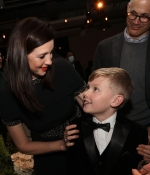
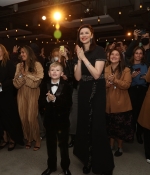
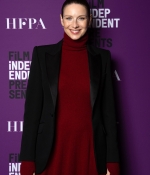
Film Independent Panel
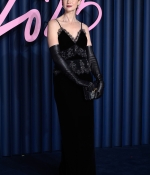
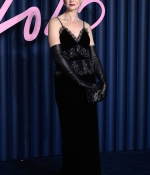
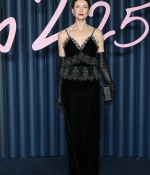
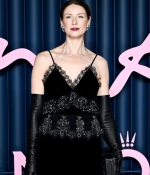
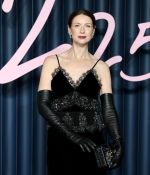
‘Belfast’ LA Premiere Red Carpet
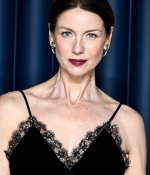
Various Press Junkets
Film Independent Panel
‘Belfast’ LA Premiere Red Carpet
Various Press Junkets

From fashion model to actor, and currently taking on her most important role yet, a new mother, actress Caitríona Balfe looks to be having her most significant big-screen breakout yet with her awards worthy performance in the emotional drama “Belfast,” opposite Jamie Dornan. On this episode of the “Variety Awards Circuit Podcast,” Balfe talks about getting the call to shoot Kenneth Branagh’s semi-autobiographical story for seven weeks during the pandemic. She also discusses her gratitude to be working during a time where there is no further delineation between film and television, and having the freedom and creativity to explore both of the realms.
Finally, get out your favorite translation app, because Balfe teases the upcoming season of “Outlander” in her native Gaelic language, discussing where her character Claire and Jamie (played by Sam Heughan) are headed in the upcoming season, scheduled for release in 2022.
Written and directed by Kenneth Branagh, “Belfast” tells the semi-autobiographical story of Buddy (Jude Hill), a young boy who lives in Northern Ireland during the tumultuous late 1960s. Alongside his working-class family that includes his parents (Jamie Dornan and Balfe) and grandparents (Ciarán Hinds and Judi Dench), the family faces life lessons and decisions that could break the family apart. The film has received critical acclaim after premiering at the Telluride Film Festival and has won multiple audience prizes on the festival circuit. At the moment, “Belfast” is one of the leading contenders for the Oscars in multiple categories including supporting actress for Balfe.
Balfe has established herself in the television realm, most notably as Claire Randall in Starz’s hit series “Outlander.” Focus Features’ “Belfast” marks only her tenth performance in movies, after having worked with filmmakers such as JJ Abrams (“Super 8”), Jodie Foster (“Money Monster”) and James Mangold (“Ford v Ferrari”), the latter of which was nominated for best picture.
Listen to the full interview with actor Caitríona Balfe in the latest edition of Variety’s Awards Circuit Podcast below!
Portraying your director’s real-life parents in a movie can be daunting, but “Belfast” stars Jamie Dornan and Caitriona Balfe say Kenneth Branagh gave them the freedom to improvise in the film based on his childhood.
“As Ken said, this is the script version of his parents, and I think he didn’t want to do an exact … he very much gave them over to us,” Balfe told TheWrap’s Steve Pond in a virtual interview during the Toronto International Film Festival. “He was like, you create this, we want you to bring what you feel from the page into your character, so I think luckily he wasn’t stopping us at any point saying, no my mum didn’t do that or my dad didn’t do that. He gave us a lot of freedom and within that, I think that pressure just goes if you’re allowed to just play.”
Dornan added: “I feel that Ken is very open like that. I feel there were moments where we were able to improvise some stuff… there are definitely ad libs here and there but again, Ken sort of trusted us.”
Dornan said that Branagh would even ask the duo for advice in certain scenes given that both Dornan and Balfe are from the northern part of Ireland, so the “colloquialisms sit very strongly within us,” Dornan explained.
“[Branagh’s] siblings were pleased with the casting, especially Caitriona, probably less so with me,” Dornan joked.
“Belfast,” filmed in black and white, follows Branagh’s childhood in the late 1960s. Branagh wrote and directed the film that also stars Ciaran Hinds, Judi Dench, Colin Morgan and Lara McDonnell.
“The first time I read the script it was the first time I read something about Northern Ireland that wasn’t about the ideology,” Balfe said. “It was about this love of family and love of community and the first time I read it, I totally teared up… it’s a love story to his childhood and the place he grew up.”
Dornan said that the script came to him during the first lockdown due to the coronavirus pandemic, and the screenplay resonated with him because he was feeling homesick for Belfast, where he was born.
“This came to us during the first lockdown where we were all in a state of disarray and pondering whether movies would ever be a thing again,” Dornan said. “I was thinking about home a lot. I was writing a script that was set at home, I couldn’t get home — when I say home I mean to the north of Ireland to Belfast — Home was on my mind, and then I got a script called ‘Belfast.’”
The actress opens up about fusing personal history with the scars of her homeland’s divided past in Kenneth Branagh’s tribute to lives “destroyed by this ridiculous sectarianism and ideology.”
Nothing soothes like a mother’s love, and Caitríona’s Balfe’s impassioned portrayal of a devoted mama bear protecting her family amid social upheaval in Kenneth Branagh’s Belfast (in theaters Nov. 12) serves as both a balm and a testament to the scars of her homeland’s bitterly divided past.
EW’s The Awardist recently caught up with the 41-year-old Outlander star (and new mother of one) out of the Toronto International Film Festival, where her turn in Branagh’s semi-autobiographical account of Ireland’s violent, three-decade sectarian conflict received standout reviews at the top of Oscars season. Below, Balfe breaks down how she fused personal history with Branagh’s heartfelt story, preparing to dance a sweet jig with costar Jamie Dornan for one of the film’s most touching scenes, and the catharsis of honoring of Ireland’s lives “destroyed by this ridiculous sectarianism and ideology.”
ENTERTAINMENT WEEKLY: Congratulations on the new baby!
CAITRÍONA BALFE: Thank you. I’m sleep-deprived, but cuddles make up for it!
Motherhood is a lovely segue into Belfast, because the maternal strength and heart you bring to this role is so moving. What were your initial conversations like with Kenneth?
He sent me the script before we’d spoken. It’s so full of heart, I got emotional reading it. As I said to him the first time we spoke, Ma just felt so familiar to me. You can’t help but think about your own childhood, your own mother. It touched me.
On one of our first days together, Ken had me, Judi [Dench], Ciarán [Hinds], and Jamie in a room together, and we talked about our upbringings. Ken asked lots of questions, we all shared. Even though this is Ken’s story, he wanted us to connect with the things personal to us, and find similarities between ourselves and his parents.
Did you have conversations with his family?
Ken’s parents unfortunately have passed, but his brother and sister make cameos in the film. I didn’t talk to them beforehand, but we met them during filming. Ken used so many of the crew he works with time and time again. It was a small crew in this bubble, I was in a hotel with the kids and their moms, so it had a family feel anyway!
You previously told The Irish Times that growing up in borderland counties wasn’t easy. The period of Belfast is about 15 years off from your childhood, but can you talk about how you channeled your experience into Ma?
Even though I didn’t grow up in Belfast or in the North, we were in such proximity that we were affected by it. Whereas Ma and Pa left Belfast, my dad, who was a police sergeant, was transferred to the border when I was a baby. Our lives were completely shaped by it. My mom left her close community in a very similar way to Ma. My mom has eight siblings, and she left all of them in this close-knit community to go and be on the border where my dad worked. We weren’t welcomed initially, because the police were regarded with a lot of suspicion and people in that area weren’t sympathetic to a provisional army. Doing the research, I watched so much footage from that time. When you see how your own people and these communities were just destroyed by this ridiculous sectarianism and ideology, and people who use that to drive wedges between people who’d lived completely peacefully for years, it’s heartbreaking… that conflict is still going on. But obviously there was the Good Friday Agreement and the peace process in ’98, which I was very much aware of at the time I was in Ireland. I know Jamie and Ciarán are from Belfast, and Judi’s mother is Irish, so we all felt a soulful connection to the movie. It’s funny how you see the British army and tanks coming through the town, and in my childhood I went through British army checkpoints into the North regularly, to go grocery shopping or the dentist.
There are political and social elements here, but Belfast is about family first. How does it feel to give a face to the people who lived this conflict? Is it cathartic?
When you get a script about Northern Ireland or that takes place in Northern Ireland, it’s always about the ideology. And this was about the people, the community, the heart. That felt special to celebrate that. Making it about the humanity of the people, of course it was rewarding. You feel a special responsibility to make sure that this is what’s important, and it feels especially timely in the last year because of Brexit, everything is heating up again. You want to just get people to see that this is what’s important; this rubbish about our side, their side, Ken speaks to it so well in the film. It’s just so ridiculous. We’re all human beings, everyone has dreams, we’re all that little kid, we’re all Buddy at some point. It’s so important to connect to that and remember that and to see that your supposed adversary is the same.
It’s a wonderful ensemble, and the emotional layers you and Jamie built are palpable. But there are great physical moments between you — particularly when you throw dishes at him! Was that improvised?
It was great, we got to do it a few times. Ken is so amazing, obviously we had the scene on the page, but he’ll let you play. There was freedom in it. Any scene where I get to throw things at people is fun! One of the things Ken emphasized was how these people love fiercely and laugh fiercely. Even if they’re arguing one minute, the next they’re dancing and kissing. Life is big and full, and Jamie and I enjoyed playing around with that.
Our first day together, we had a dance rehearsal for two people. Now that I’ve seen him dance on a beach in Barb and Star… He was like, “Oh, I can’t dance,” and I’m definitely not somebody who learns choreography well, so if there was ever a good bonding moment, stick two people who claim to not dance very well together for dance rehearsals!
Walk us through filming the dance. How long did you work on it prior to shooting?
Not very long! [Laughs] We had an amazing choreographer who’d steal us a couple hours between filming. It was a heat wave in London, so there were one or two days where it was 35 degrees Celsius or more, and we’re trying to learn these dance moves in a tiny bit of shade. We were dying. We didn’t want it to feel like they were too professional, so that’s my excuse for the very amateur-looking feel that we gave it!
What’s Jamie like as a dancer partner?
He’s one of those annoying people where he was like, “I’m never going to get this!” and then the day of filming, he just busted it out and I was the one making mistakes. He was perfect! It was good fun. Any time you get to do stuff like that, it’s freeing and fun. And it’s such a beautiful point in the movie. We watched Jude [Hill] while they filmed his close-up reactions to us dancing, and Jamie and I stood there like two proud parents. He’s so amazing and looked so angelic, but going through this whole range of emotions that Ken prompted. We were like, “Our son!”
You’re all getting huge acclaim out of the fall festivals. You’ve gone through this for Emmys on the awards circuit, but it’s still early in Oscars season. What does that waiting period feel like? Is it nerve-wracking or validating?
It’s lovely that people connect to it and enjoy it. I feel happy for Ken because I know how much he put into this and it means so much to him. To see people embrace it because it resonated with them, that makes me happy… It feels great when you enjoy the process of making something when the experience is special to you on a personal level. To see that go out into the world and touch people, it feels great. Even if it didn’t, it’d still be a special film to me. But the fact that it is… it’s the cherry on top.
 |
 |
 |
 |
 |
 |
 |
 |
 |
 |
 |